Permanent Exhibition
10 Galleries combining innovative technology, archaeological discoveries, and ancient artifacts
The New Permanent Exhibition at the Tower of David Museum, Jerusalem
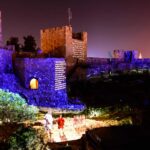
The new permanent exhibition invites visitors on an exciting, interactive journey through the many layers of Jerusalem – the city at the center of the world. Ten state-of-the-art galleries showcase original ancient artifacts alongside immersive video art, interactive stations, dynamic wall projections, and specially produced films. Housed within a 2,000-year-old ancient citadel, the museum presents one of the most technologically advanced exhibitions in the world, blending rich layers of content with an engaging and enjoyable experience.
Gallery 1: On the Edge of Eternity – Introductory Gallery
The Introductory Gallery welcomes visitors to both the museum and the city of Jerusalem.
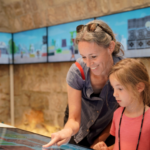
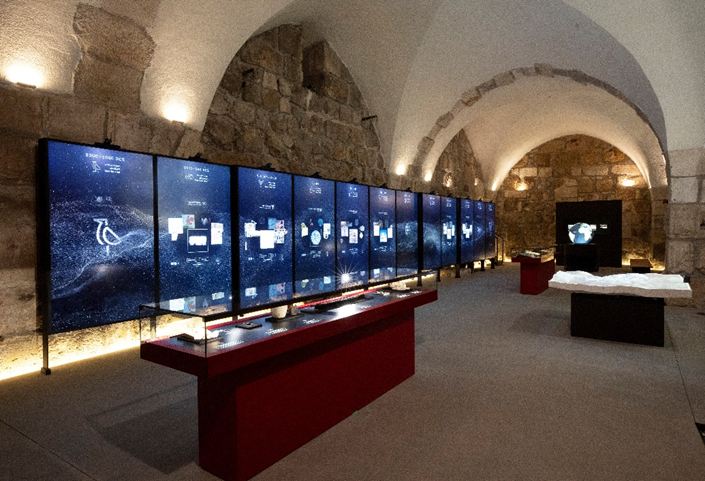
The city’s 4,000-year history is brought to life through a variety of engaging elements: video projections that tell Jerusalem’s story, authentic artifacts – each with its own unique tale – an exploratory topographical map and illuminated globe. At the heart of the gallery is a 12-meter interactive timeline, inviting visitors to either take a quick journey through the city’s rich and eventful past or dive deeper into specific historical periods. The choice is theirs.
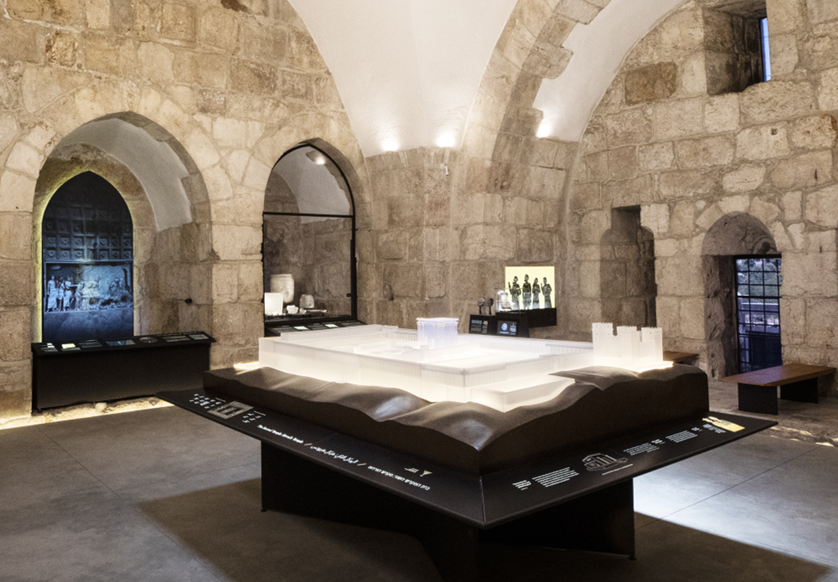
Gallery 2: The Holy City: Tracing Sanctity – Judaism
The connection between Jerusalem and the Jewish people is a story over 3000 years old. The gallery explores that special relationship through beautiful animations, videos and immersive installations as well as archaeological artifacts dating back thousands of years. At its center stands a detailed model of the Second Temple and Temple Mount, an ancient site brought to life through modern 3D printing. From the windows in the ancient walls of the gallery, visitors can view the modern city of Jerusalem, reinforcing the connection between past and present.
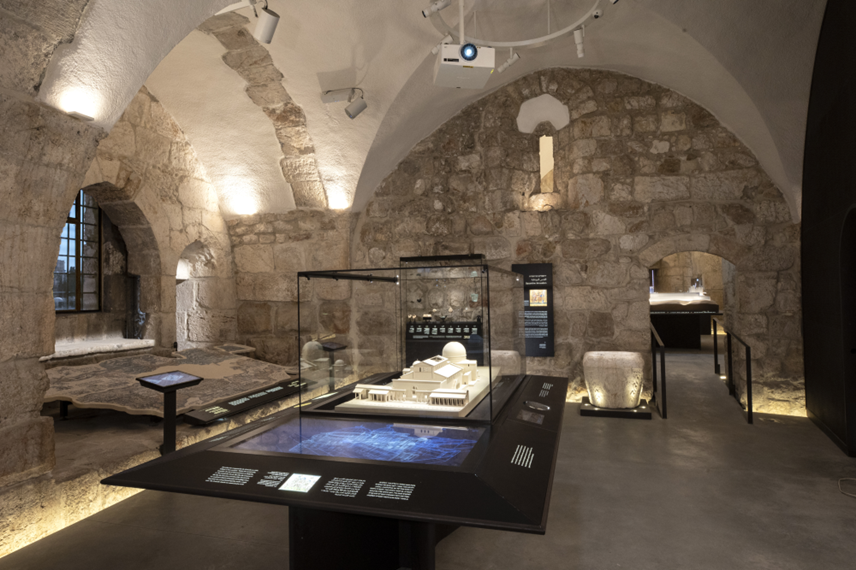
Gallery 3: Sacred Geography: Tracing Sanctity – Christianity
Jesus spent the final and most eventful week of his life in Jerusalem, a time that ultimately sanctified the city for Christianity. This gallery focuses on that pivotal week, as well as on the Byzantine and Crusader periods, when Christian rule shaped Jerusalem. At its center stands a model of the original Byzantine Church of the Holy Sepulchre. The surrounding exhibits highlight the enduring physical and spiritual imprint Christianity left on the city and its importance for Christians everywhere.
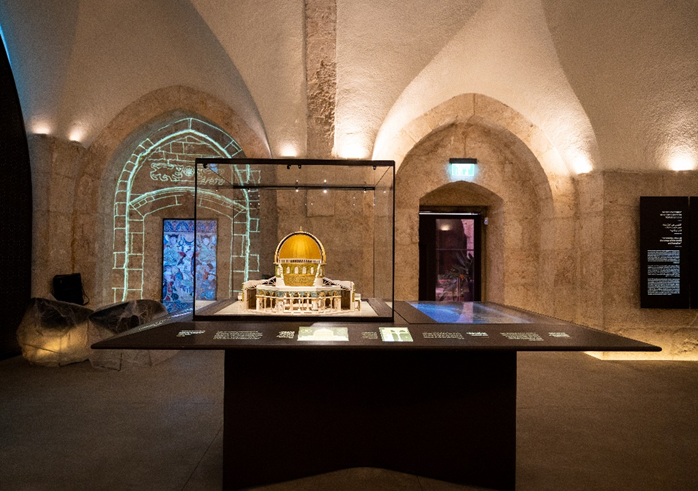
Gallery 4: Praises of Jerusalem: Tracing Sanctity – Islam
In the 7th century, Arab forces conquered Jerusalem, marking the beginning of Muslim rule and architectural and spiritual development.
At the center of this gallery stands a detailed model of the Dome of the Rock, as built in the 7th century with a section of the facade removed allowing visitors to see the interior. An animated installation illustrates Muhammad’s Night Journey in which he is believed to have ascended to heaven from Jerusalem, establishing the city as the third holiest in Islam.
A medieval minbar (pulpit) and mihrab (prayer niche) reflect the gallery’s historical use as a mosque, traditionally linked to King David, during the Ayyubid and Ottoman periods. Interactive displays, artifacts, and videos further explore Islamic influence on Jerusalem and its spiritual significance for Muslims worldwide.
Gallery 5: Jerusalem: The Circle of the Year
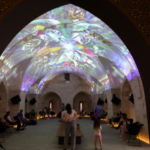
An enthralling video art installation spans the entire vaulted ceiling of the gallery, creating a dynamic digital fresco depicting the cycle of the year in Jerusalem. Accompanied by an original soundtrack of music, chants, and prayers, the installation highlights the city’s rich tapestry of religious and cultural calendars, giving voice to Jewish, Christian, and Muslim celebrations.
Touchscreens along the gallery walls offer in-depth information about Jerusalem’s holy days. The installation was created by artist David Polonsky and composer Amit Hai-Cohen.
Movie of the gallery
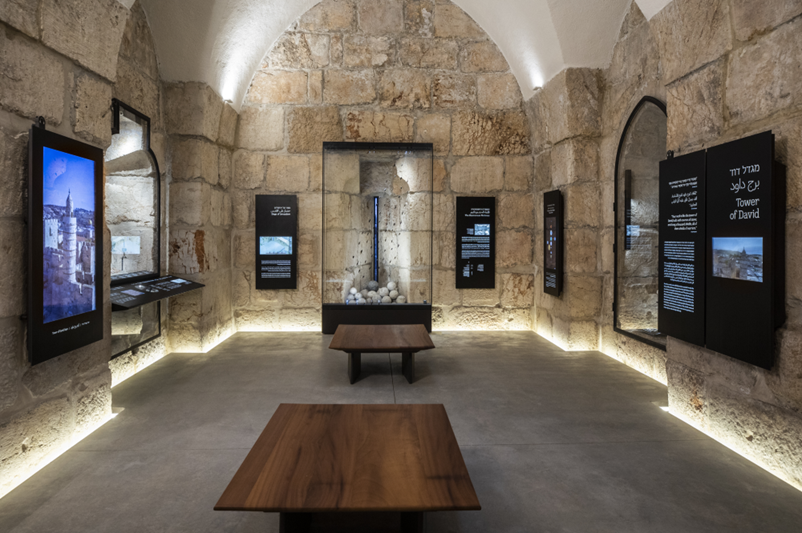
Gallery 6: Tower of David
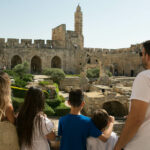
The Tower of David, the citadel of Jerusalem, contains within its massive walls, archaeological evidence that spans the entire history of Jerusalem – from fortifications dating to the First Temple Period through every era until the present day. That history is vast and complex, but the gallery presents it in a clear, engaging, and relatable way. Using projection mapping, video archives, a rich display of ancient and modern artifacts, and even digital games, it brings the story of the citadel to life and highlights the Tower of David as a lasting symbol of the city.
Gallery 7: The Gallery (Temporary Exhibitions)
Gallery for changing exhibitions. Currently, the Gallery is presenting I Am a Jerusalemite, a continuation of the temporary exhibition Yehoram Gaon. A personal and musical video documentary explores the urban and human landscapes of Jerusalem, interwoven with Gaon’s own reflections. The film is displayed on a large-scale triptych screen enhanced with surround sound.
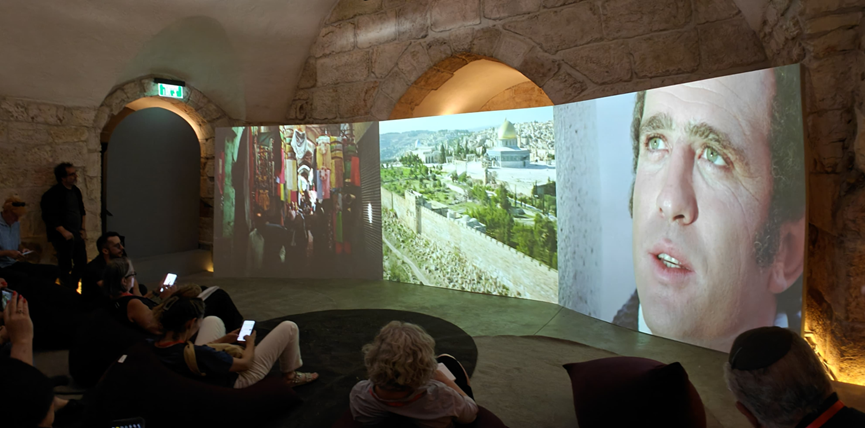
Gallery 8: From a Bird’s Eye View – 19th Century Jerusalem Model
Dominating the gallery is a large, elaborate, and meticulously detailed model of Jerusalem as it appeared in 1873. Measuring 4 by 4.5 meters, the model includes every street, alley, building, mountain, and valley, capturing the city in remarkable accuracy. It was created by Stephan Illés, a Hungarian pilgrim who arrived in Jerusalem in 1864 and worked as a bookbinder at the Franciscan printing press.
The model was first exhibited in 1873 at the International Exhibition in Vienna, in the Ottoman Empire pavilion, where it received wide acclaim. Illés later toured with it across Europe, and in 1878 it was purchased by La Maison de la Réformation in Geneva for permanent exhibition. Eventually placed in storage, the model was forgotten until 1983, when a young Hebrew University researcher, Moti Jair, contacted prominent Geneva figure David Littman, who rediscovered it in the attic of the Palais Wilson on the shores of Lake Geneva. With the support of Jerusalem’s mayor Teddy Kollek, the model was returned to Jerusalem on permanent loan.
With its cartographic precision, the Illés Model is a valuable scientific and historical resource for the study of 19th-century Jerusalem. Every fifteen minutes, a short film by director Naftali Hilberg is projected onto the model, illuminating it with special lighting and telling it’s fascinating story through archival footage and historical imagery. Interactive touchscreens allow visitors to explore specific sites in detail, while digital games invite them to reconstruct Jerusalem’s major landmarks.
Video of the gallery
Gallery 9: Modern Times – Jerusalem: Center of the World
Jerusalem’s history is not only ancient – the process of modernization that unfolded over the 19th and 20th centuries transformed Jerusalem into a city of international significance, the capital of the State of Israel. This gallery tells the story of the past 200 years through archival materials – photographs, films, and documents – showing Jerusalem through the eyes and voices of the people who lived here. Director Ben Shani uses 3 large double-sided screens to artistically recreate the timelines and major themes of Jerusalem in the modern era. The films, designed to function both individually and together, create a powerful shared experience and highlight key events that shaped the city.
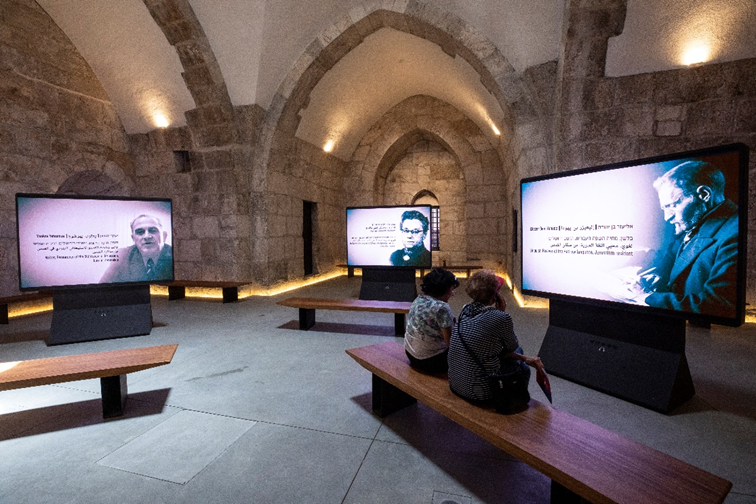
Gallery 10: Eye Towards Zion
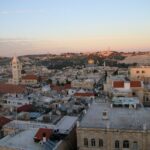
The dawn of photography in Jerusalem began in the mid-19th century, shortly after the invention of photography itself. The city quickly became a subject of fascination for early photographers – both for its religious significance and its picturesque, ancient landscape. This gallery is dedicated to photography and photographers of modern Jerusalem, offering rare glimpses into the development of the city. It includes a reading library with books on the city, inviting visitors to rest, reflect, and enjoy the view of Jerusalem from the windows.
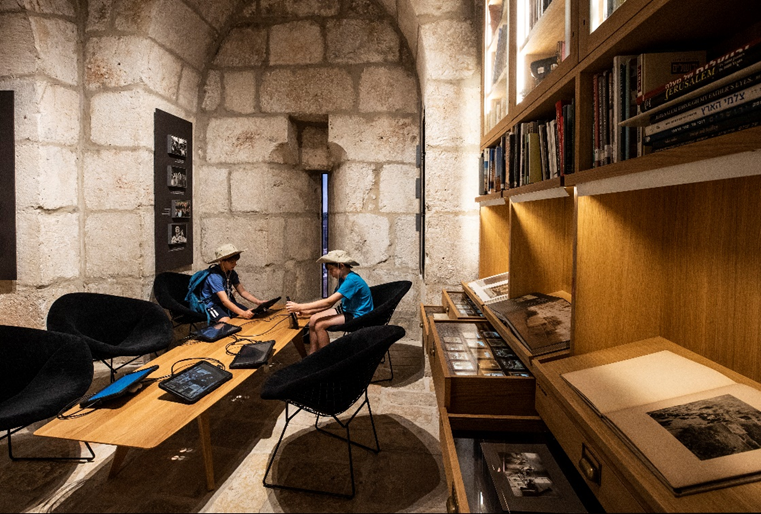
Entrance to galleries is included in the entrance ticket to the Museum
Photo Credits: Oded Antman, Ricky Rahman, Abir Sultan
Contact us
Thank You!
Your message has been sent, we will contact you as soon as possible.Upgrade your visit to Jerusalem
-
![]()
-
![מגדל דוד]()
Visiting the Tower of David Jerusalem Museum
Fascinating exhibitions, unique tour routes, archaeological sites
-
![]()
THE SCHOOL SYSTEM
Special activities and guided tours at the Educational Center of the Tower of David Museum, designed for kindergartens and schools
-
![]()
IDF Units - The Tower of David is Waiting for you
The Tower of David Museum of Jerusalem invites you – IDF units and departments – to a variety of tours and experiential activities at the most beautiful site in Jerusalem.
Advanced registration -
![תצפית מגדל פצאל]()
Phasael Tower Observation Point
360° expansive view over the east and the west - the Old City and the New City, the past and the future..
All year round During opening hours -
![]()
-
![]()
Permanent Exhibition
The new permanent exhibition at the Tower of David Jerusalem Museum invites visitors on a journey to the center of the world, Jerusalem. A city sacred to 3 religions: Judaism, Christianity, and Islam.